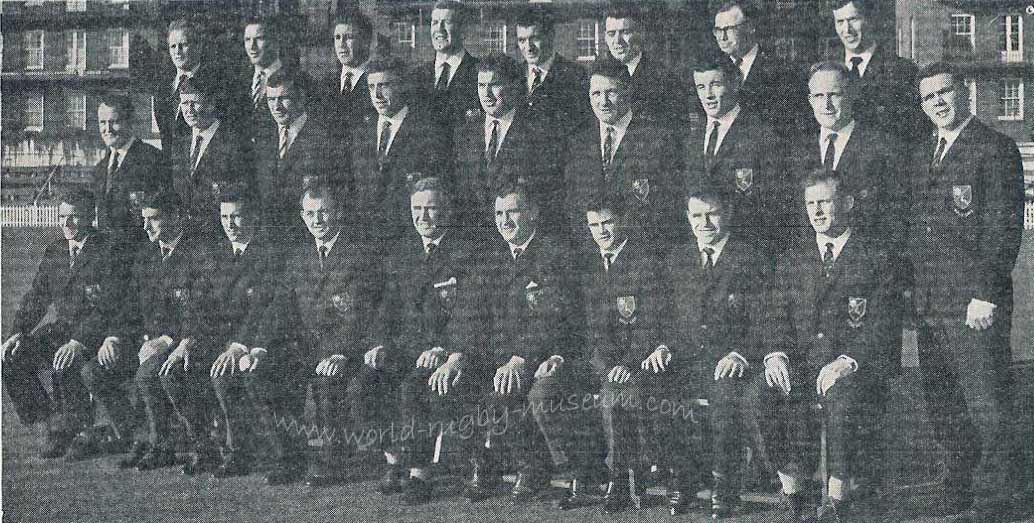
WALES TOUR of SOUTH AFRICA 1964
|
In 1964 the Welsh national team undertook their first overseas tour. The host country, South Africa were celebrating the 75th Anniversary of their union (South African Rugby Football Union. The Springboks were still unbeaten against Wales and continued this run with victory in the only test of the tour. Wales played a total of five matches, winning three and losing two. Although not a successful trip for the Dragons of Wales it became a watershed in the history of Welsh Rugby aand the sport itself. It was the failure of the team in this tour that sparked the Welsh Rugby Union into action. The next year they appointed the first ever National Coach and embarked on a trail of glory that culminated in the four consecutive Triple Crowns and two Grand Slams 1976 - 1979.
|
||||||||
|
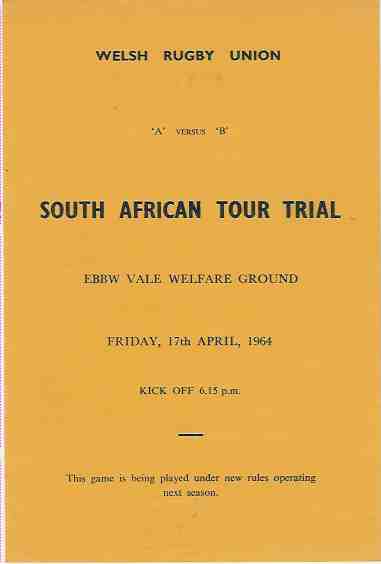
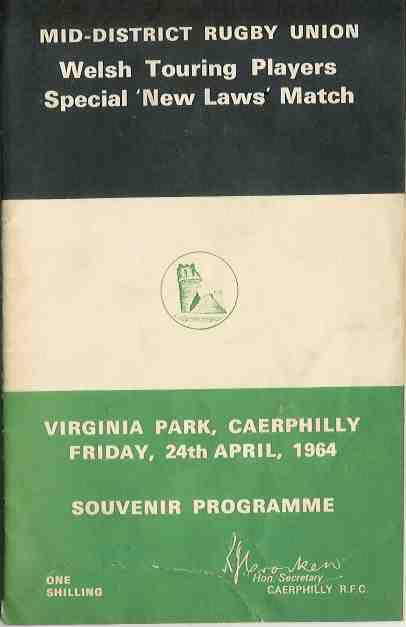
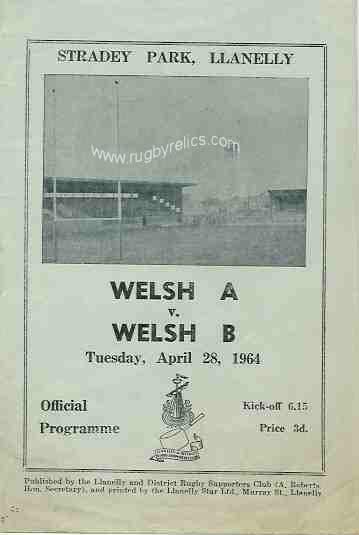
Prior to the tour three special matches were arranged, all played under the 'new laws'. Initially these were to pick the players for the tour and also to try out the the 'new laws'. We believe these three matches to have been played at Ebbw Vale on April 17th, Caerphilly April 24th and at Llanelli, date to confirmed. They took the format of Wales 'A' v Wales 'B' matches. Hopes were high of a first victory over the Springboks and the squad were travelling to South Africa with this as their main objective. JBG Thomas writes in the programme for the pre-tour match at Caerphilly. “The first tour by a Welsh team
abroad is an important event and it is good that the sporting town of All 24 players selected are in action
today in the two sides, one representing the full Welsh side and the other
containing the remaining nine players selected. This should be a match of
considerable interest, for everyone in Overseas tours are the highlights of
players' careers, and there is something special about the Welsh visit since it
is the first made by Wales outside Europe and the last of a cycle of four made
by the individual home countries in recent years. The purpose of the tour to show the
best form on the field and the best conduct off it, and there is no fear that
Manager D, J. Phillips and his party will fail in their objective, but they do
want to win the test match! All their efforts will be directed
towards winning the test for It is not easy to forecast how the
matches will go because on all tours, some players improve on their form at
home, and some play below it. Yet this is not a long tour and many of the
difficulties experienced by the British Lions will be absent. Fitness is
essential and adaptation to new conditions even more important, and that is why
the team's management are taking every precaution to see that the party is tuned
both mentally and physically to the needs of the tour. The three special matches should
acquaint the players with the amended laws and develop a spirit of combination.
The tactical discussions will ensure that each player knows his part in the
proceedings and the part to be played by every other player. South African
opposition will be strong, keen, swift and determined, and under their various
coaches will have studied well the approach of Welshmen from films, articles and
books, and will be guided by Springboks who have played in The Welsh party have a pre-tour training programme that will prepare them for all eventualities and the party will not fail for the want of trying. There is a good team spirit among the players and if this is transmitted effectively into their play, they will enjoy a happy and successful tour. They leave From So the stage is set for an excellent
tour. May the Welsh team do really well, and may Caerphilly enthusiasts give
them a good send-off this evening.” |
||||||||
|

|
|
||||||
| Trial at Ebbw Vale 17th April | 'New Laws match' at Caerphilly 24th April | The final 'new laws' match at Stradey Park, the 'B' team included 9 players from West Wales clubs, Felinfoel, Carmarthen, Gorseinon, New Dock Stars & Ystradgynlais. | ||||||
|
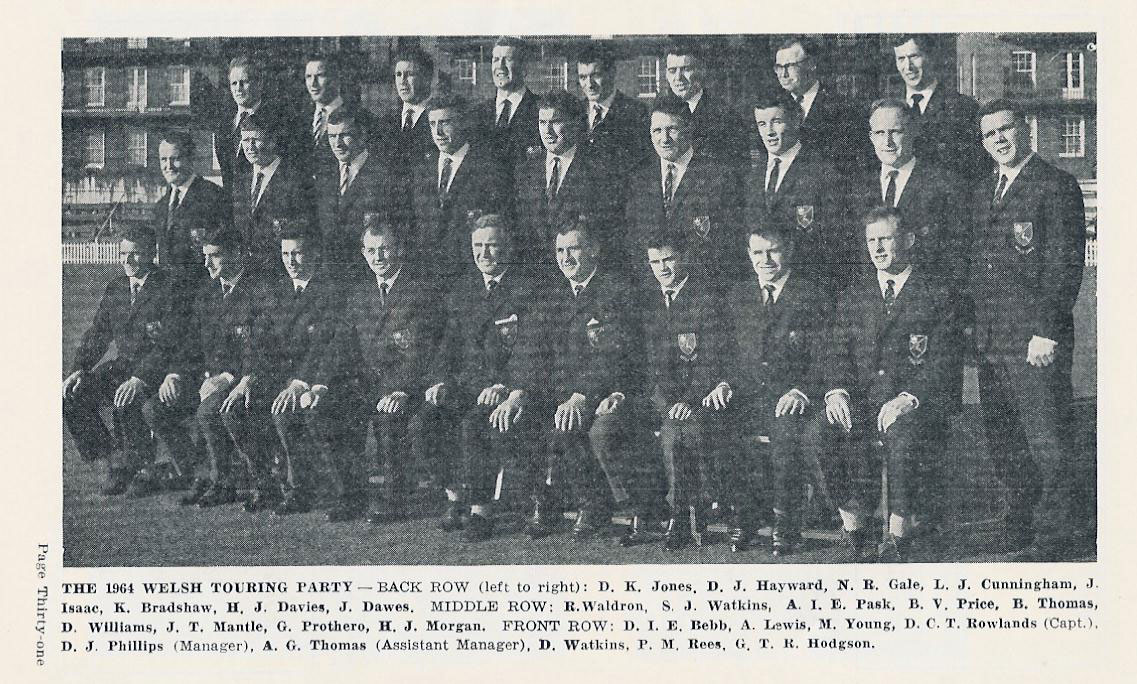
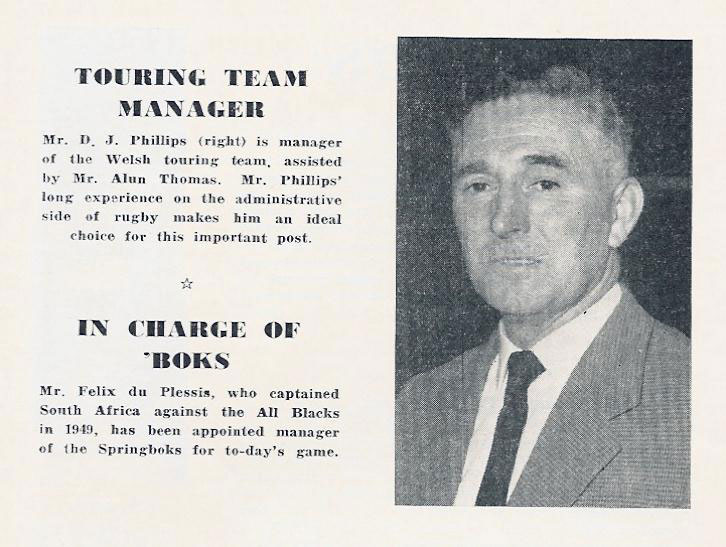
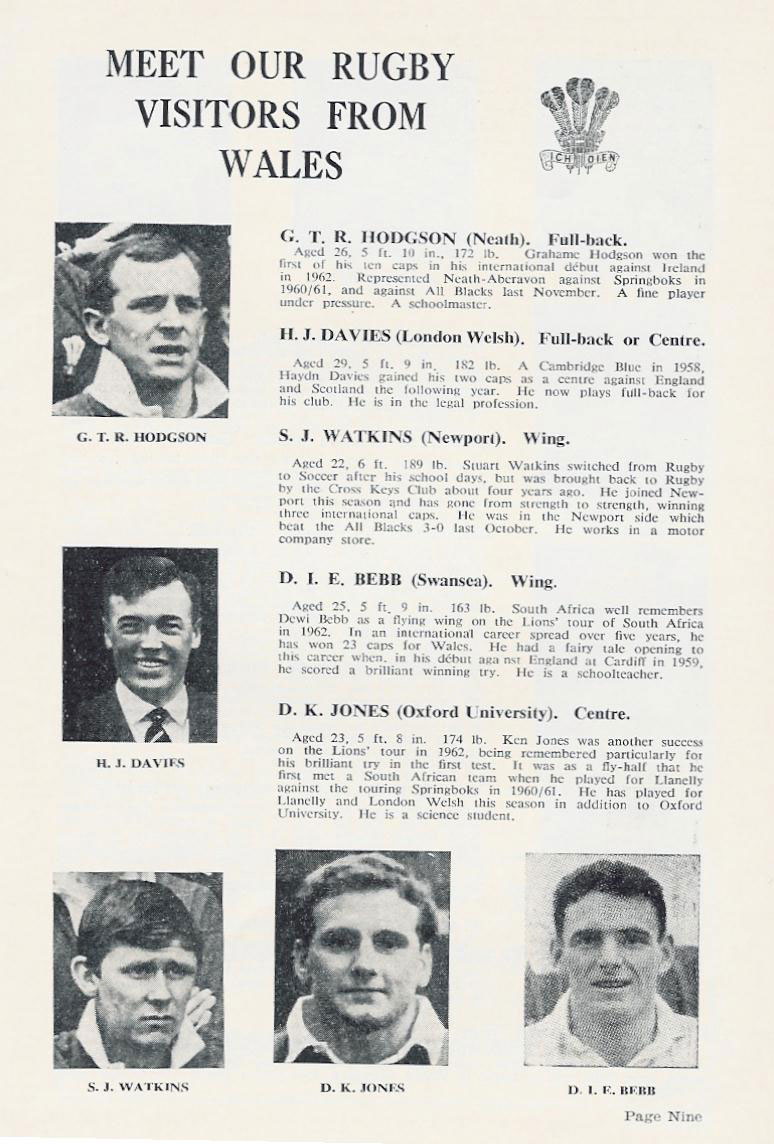
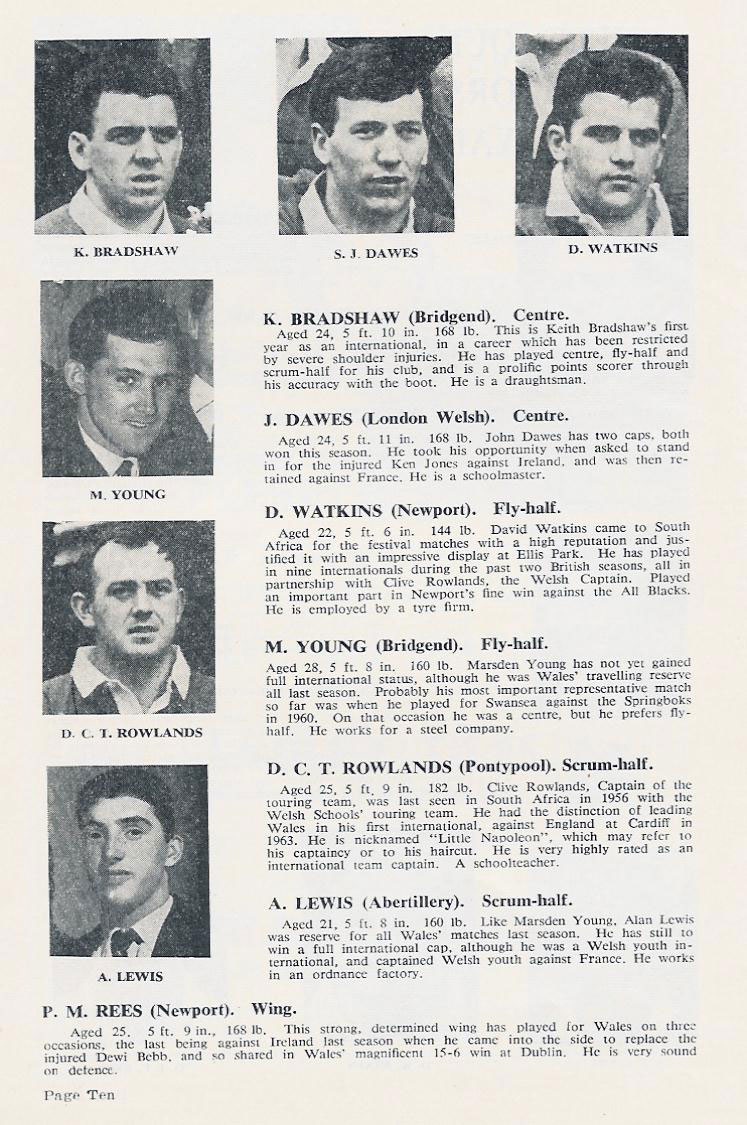
THE TOUR PARTY
|
||||||||
 |
 |
 |
 |
 |
 |
 |
||
|
|
||||||||
 |
|
|
||||||
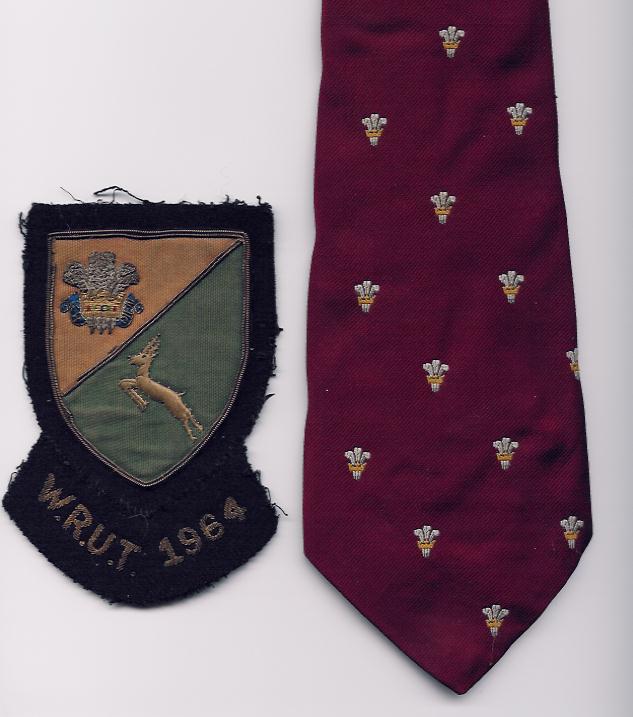
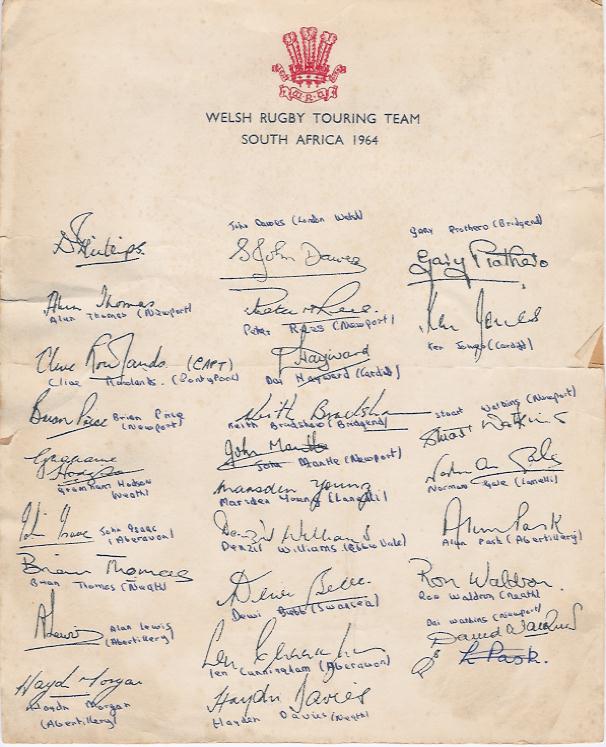
| Illustrated left is the blazer badge (WRM-0292) and tour tie (WRM-0293) worn by John Mantle during the tour, the central photo is of John Dawes wearing his blazer and tie. Illustrated right is the 'printed' autograph sheet handed out to supporters during the tour | ||||||||
|
THE TOUR MATCHES
|
|
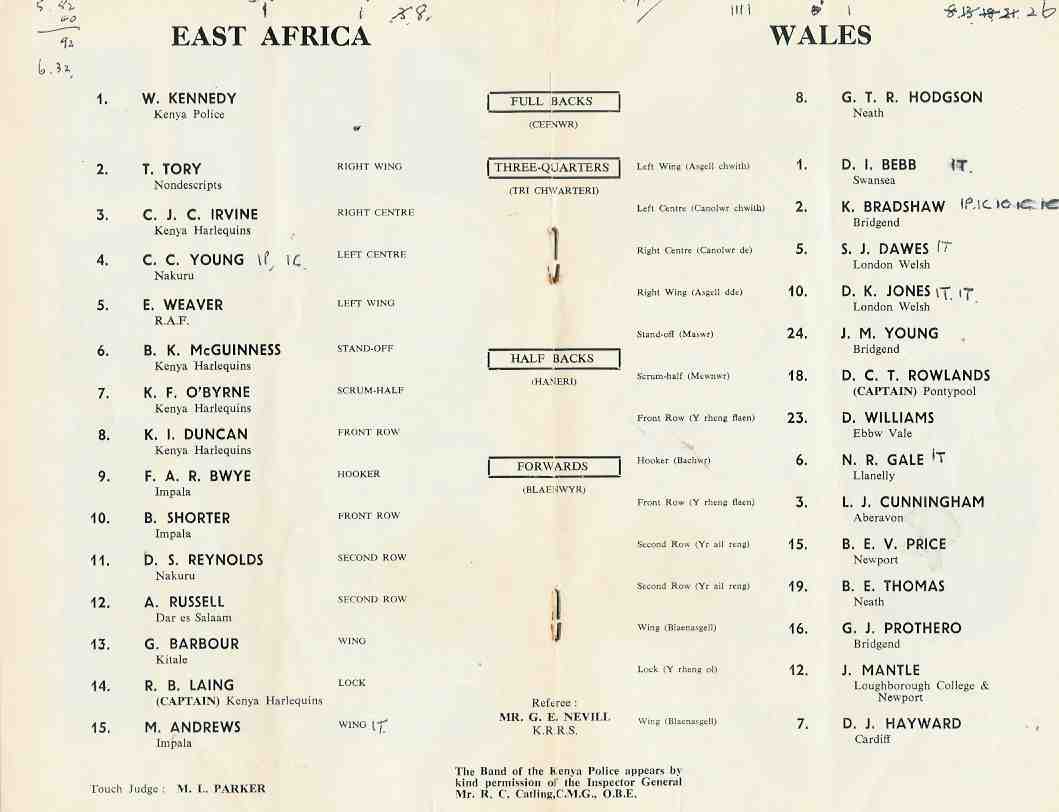
May 10 v East Africa at Nairobi (won 26 - 8)
Programme for the match against EAST AFRICA on May 12th. This was the first ever match that Wales played outside of Europe. Illustrated are the front cover, team pages and an article by JBG Thomas in the programme |
|
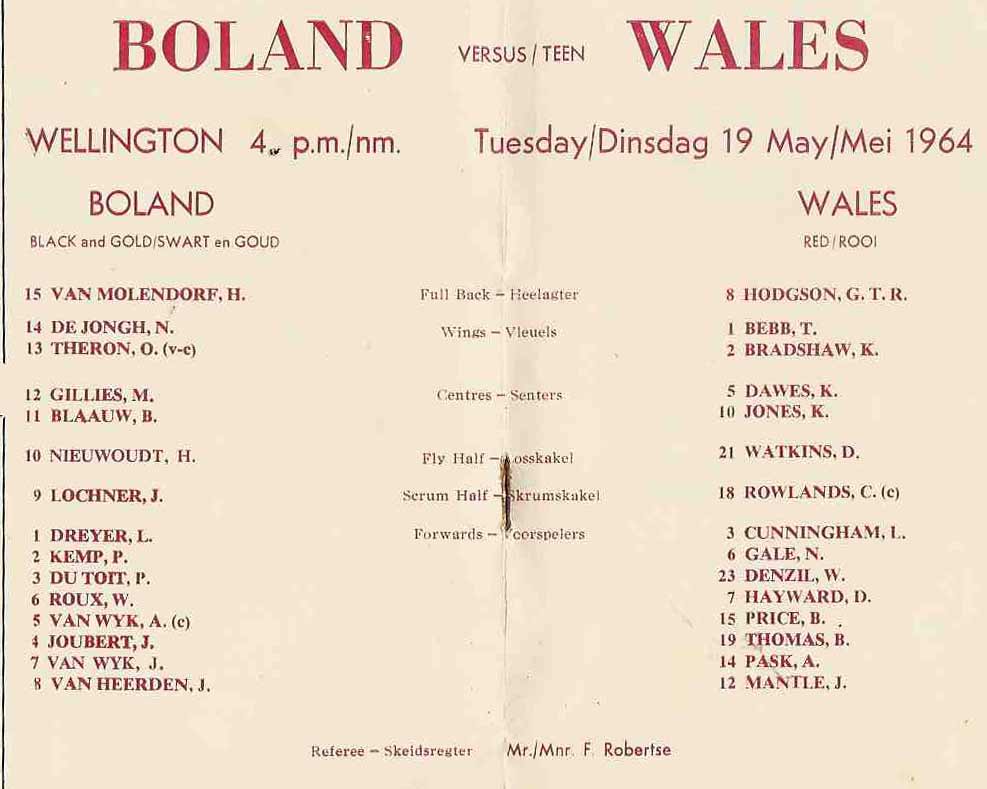
May 19 v Boland at Wellington (won 17 - 6)
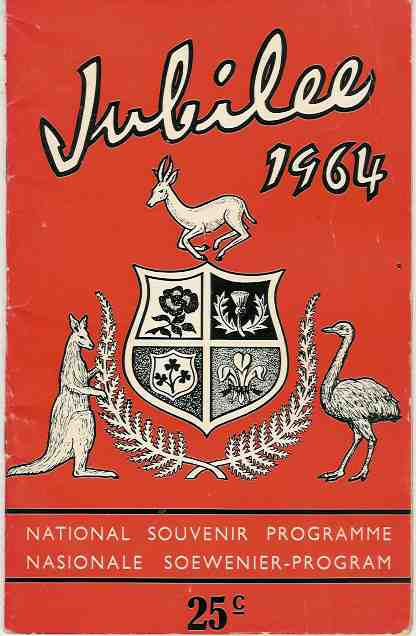
Illustrated above is the 'National Souvenir Programme' for sale on the day. The all purpose programme was available for most major matches in South Africa during this year. It was especially prevalent during the South African Jubilee matches celebrating the 75th Anniversary of SARFU. The centre pages including teams were the only difference at each individual match where this programme was available. (WRMR-0072) |
|
May 23 v South Africa at Durban (lost 3 - 24) MATCH
REPORT - SOUTH
AFRICA v
WALES King's Park, Durban. May 23, 1964 South
Africa won by three goals, one dropped goal, two penalty goals(24) to one
penalty goal (3) The
biggest Welsh defeat for 40 years. That was how Wales crashed in the heat at
Durban on the first tour they undertook. The Springboks ran them off their feet
in the last 20 minutes to register their sixth consecutive win over the Red
Devils. Not since the 35-10 hammering from Scotland at Inverleith in 1924 had
Wales been so routed. The only score Clive Rowlands and his men could manage was
a Keith Bradshaw penalty goal. This goal kept Wales in the game with the score
3-3 at half time. But there was no escape after that. Wales's
decision not to run with the ball was a mistake and, though Norman Gale stole
six tight heads while conceding three, and Brian Price jumped well to win
line-out possession, they could not match the home forwards' mobility and
stamina. The pace wore down the Welsh pack and in one spell of eight minutes,
South Africa snatched 13 points. Keith Oxlee kicked 12 points and in his 19
tests for the Springboks he aggregated 88 points. South Africa: L G Wilson; J P Engelbrecht, J L Gainsford, D A Stewart, C G Dirksen; K Oxlee, C M Smith; J. L. Myburgh, G F Malan (capt.), J F K Marais, G Carelse, A S Malan, T P Bedford, D J. Hopwood, F C H du Preez. Wales:
GT R Hodgson (Neath); D K Jones (L1anelli), S J Dawes (London Welsh), K Bradshaw
(Bridgend,) D I Bebb (Swansea); David Watkins (Newport), D C T Rowlands (Pontypool,
capt.); L J Cunningham (Aberavon), N R Gale (L1anelli), Denzil Williams (Ebbw
Vale), Brian Price (Newport), Brian Thomas (Neath), A E I Pask (Abertillery), J
T Mantle (Newport), David Hayward (Cardiff). For
South Africa, Johannes Marais, Doug Hopwood and Nelie Smith scored tries. Keith
Oxlee converted them and kicked two penalty goals. Lionel Wilson dropped a goal.
For
Wales, Keith Bradshaw kicked a penalty goal. Referee: Dr G K Engelbrecht
(Transvaal).
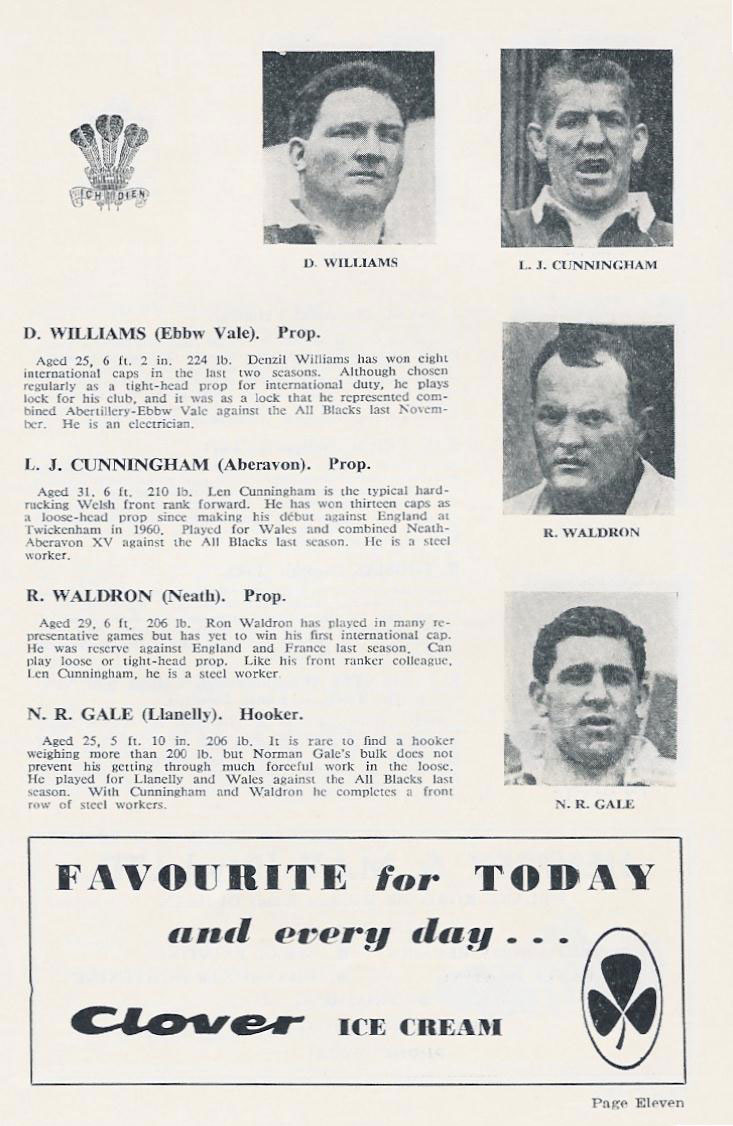
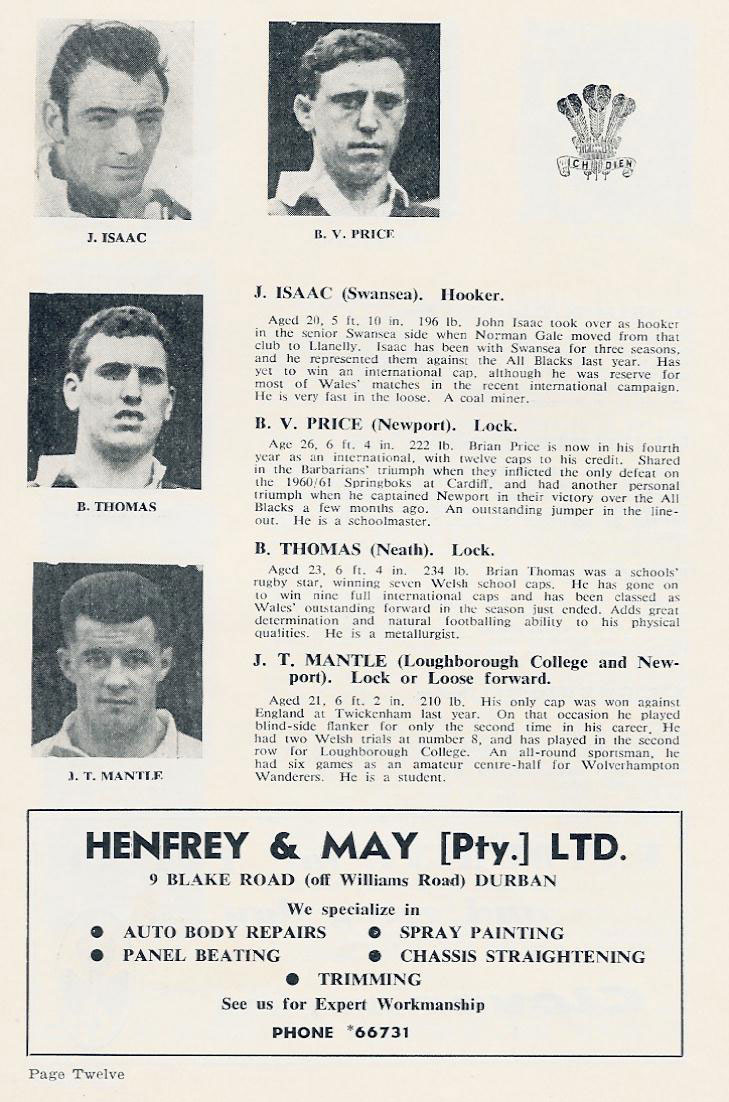
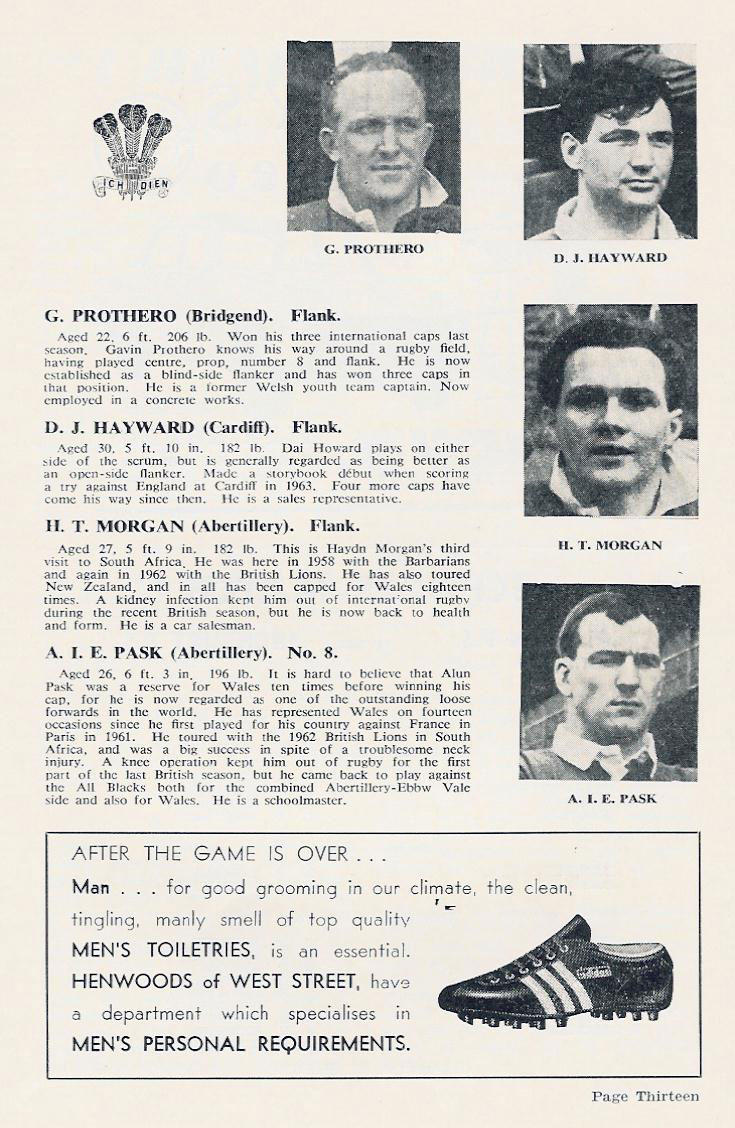
SOUTH AFRICA v WALES official programme, 40 page, A5 size programme, click on images to enlarge each page
|
|
May 27 v Northern Transvaal at Pretoria (lost 9 - 22)
|
|
May 30 v Orange Free State at Bloemfontein (won 14 - 6)
|
Thank you for visiting this page. If you are able to contribute any other stories, photos or information to this page, please email us
CLICK
HERE TO EMAIL THE WORLD RUGBY MUSEUM
... ...
|
|
The World-Rugby-Museum is hosted and supported by Rugby Gifts & Rugby Relics |
|